
Brain Training for Dogs: Games, Mental Stimulation & Training Guide
Discover how brain training for dogs and mental stimulation can complement everyday dog training. Explore dog brain games, positive reinforcement and the Brain Training for Dogs program.
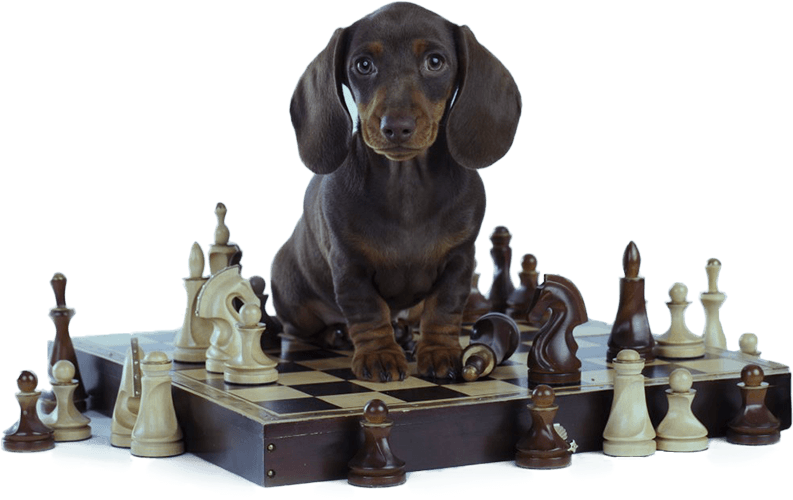



Brain Training for Dogs: Games, Mental Stimulation & Training Guide
Dogs need more than physical exercise.
Daily walks, playtime and outdoor activities are important, but dogs also benefit from opportunities to think, explore, learn and solve problems.
That's where brain training for dogs can become an interesting addition to a regular training routine.
Dog brain games and mental stimulation activities can give your dog something constructive to focus on while also creating opportunities for you to practice communication, rewards and positive reinforcement.
One program that takes this approach is Brain Training for Dogs, created by professional dog trainer Adrienne Farricelli.
But what exactly is dog brain training, and is a structured program worth considering?
Let's take a closer look.
What Is Brain Training for Dogs?
Brain training for dogs refers to activities that encourage dogs to use their attention, memory, problem-solving abilities and learned behaviors.
Instead of simply repeating commands such as "sit" or "stay," brain games can introduce challenges that require your dog to figure something out.
Examples can include:
- Finding hidden treats
- Learning new tricks
- Solving simple puzzles
- Following scent-based activities
- Learning object-based games
- Practicing impulse control
- Working through progressively more difficult exercises
The goal isn't simply to keep your dog busy.
Good mental stimulation should give your dog an opportunity to learn and engage with you.
Why Do Dogs Need Mental Stimulation?
Imagine doing the same simple activity every day without any variation.
Physical movement would still be important, but eventually you'd probably want something more challenging.
Dogs can benefit from variety too.
Mental stimulation can be incorporated into everyday life through training, interactive play, exploration and problem-solving activities.
For some dogs, this can be particularly useful when boredom becomes an issue.
However, mental stimulation isn't a replacement for appropriate physical exercise, social interaction or professional behavioral help when a serious problem is involved.


Brain Games for Dogs You Can Try at Home
You don't necessarily need expensive equipment to introduce your dog to mental exercises.
Here are several simple ideas.
1. The Treat-Finding Game
Hide a small amount of your dog's regular food or an appropriate treat in an easy-to-find location.
Encourage your dog to search for it.
As your dog becomes more comfortable, you can gradually make the activity more challenging.
2. The Cup Game
Place a treat underneath one of several cups and allow your dog to investigate.
This creates a simple problem-solving exercise.
Always supervise your dog and make sure the objects used are safe.
3. Learn a New Trick
Training doesn't have to stop once your dog knows the basic commands.
Teaching a new behavior gives you another opportunity to practice communication and positive reinforcement.
4. Food Puzzles
Puzzle feeders can encourage dogs to work for their food rather than simply eating from a bowl.
Choose an appropriate puzzle for your dog's size, experience and chewing habits.
5. Hide-and-Seek
Have your dog stay in one area while you hide somewhere nearby.
Then call your dog and reward them when they find you.
This can turn training into an interactive game.
What Is Brain Training for Dogs by Adrienne Farricelli?
Brain Training for Dogs is an online dog-training program created by Adrienne Farricelli.
The official program describes Farricelli as a professional dog trainer certified through the CCPDT. The program focuses on positive reinforcement and includes 21 games designed to progress through different levels of difficulty. (Brain Training for Dogs)
The basic concept is to combine dog training with mental stimulation rather than relying exclusively on traditional obedience drills.
The exercises are intended to give dog owners structured activities that they can practice with their dogs.
Who Is Adrienne Farricelli?
Adrienne Farricelli is the creator behind Brain Training for Dogs.
Her official website identifies her as a professional dog trainer certified by the Certification Council for Professional Dog Trainers (CCPDT) and notes that her work has appeared in publications including USA Today and the APDT Chronicle of the Dog. (Brain Training for Dogs)
Her approach emphasizes positive reinforcement and reward-based training.
This is an important part of understanding the program because Brain Training for Dogs isn't presented simply as a collection of obedience commands.
Its emphasis is on combining training exercises with mental engagement.
How Does Brain Training for Dogs Work?
The program uses a progressive structure.
Rather than immediately jumping into difficult exercises, the training is organized so that owners can work through activities at increasing levels of difficulty.
According to the official program information, Brain Training for Dogs contains 21 games. (Brain Training for Dogs)
This type of progression can be useful because dogs don't all begin with the same level of training experience.
A beginner exercise may be appropriate for one dog, while another dog may be ready for something more challenging.
The important thing is to work at a pace your individual dog can handle.
Positive Reinforcement Dog Training
One of the key concepts associated with Brain Training for Dogs is positive reinforcement.
Positive reinforcement means rewarding a behavior you want to encourage.
The reward could involve:
- Food
- Praise
- Play
- A favorite toy
- Another reward your dog finds motivating
For example:
Dog performs desired behavior → owner provides reward → behavior is more likely to be practiced again.
Training should remain appropriate for the individual dog.
If your dog becomes frustrated or overwhelmed, it's better to simplify the exercise rather than continually increase the difficulty.
Brain Training vs. Physical Exercise
This distinction is important.
Physical exercise helps dogs move their bodies.
Mental stimulation gives dogs opportunities to think, learn and interact with their environment.
Most dogs need a combination of both.
A mentally stimulating game isn't intended to replace walks or appropriate physical activity.
Instead, dog brain games can become another component of a balanced routine.
Think of it as:
Walk + play + training + mental stimulation + rest
rather than choosing one activity and ignoring everything else.
Can Brain Games Help With Boredom?
Mental stimulation may be particularly useful for dogs that need additional enrichment.
A dog that has plenty of physical activity but very little opportunity to learn or interact with its environment may still benefit from additional activities.
Training games can give dogs something constructive to focus on.
However, it's important not to assume that every behavior problem is caused by boredom.
Excessive barking, aggression, severe anxiety, destructive behavior or other concerning behaviors can have different causes.
If you're dealing with a serious behavioral issue, working with a qualified veterinarian or appropriately qualified behavior professional may be more suitable than relying on an online training course alone.
Is Brain Training for Dogs Suitable for Puppies?
Many mental stimulation activities can be adapted for puppies.
However, puppy training should take age, attention span, physical development and individual temperament into account.
Short, positive training sessions are generally more practical than expecting a young puppy to concentrate for long periods.
The same principle applies to older dogs.
The difficulty of the exercise should be appropriate for the individual dog.
Brain Training for Dogs: Pros and Cons
Before considering any online dog-training program, it's worth looking at both sides.
Potential advantages
- Structured training approach
- Mental stimulation activities
- Positive reinforcement focus
- Can be practiced at home
- Progressive exercises
- Doesn't require expensive training equipment for every activity
- Gives owners structured activities to practice with their dogs
Potential limitations
- Requires owner participation and consistency
- Not every exercise will suit every dog
- Online training cannot replace individualized professional behavioral assessment
- Results can vary between individual dogs
- Serious behavioral problems may require professional help
This is why it's better to view a program as a training resource, rather than a guaranteed solution.
How Much Time Should You Spend Brain Training Your Dog?
There isn't one perfect number that applies to every dog.
Some dogs may enjoy short training sessions several times throughout the day.
Others may become distracted or frustrated more quickly.
Start with manageable sessions and pay attention to your dog's behavior.
If your dog remains engaged, you can gradually introduce more challenging exercises.
The objective is quality interaction, not simply making a training session longer.
How to Get the Most From Dog Brain Games
If you want to introduce more mental stimulation into your dog's routine, consistency matters.
Try these principles:
Keep training positive
Make learning enjoyable rather than intimidating.
Start simple
Don't begin with the hardest possible challenge.
Reward desired behavior
Use rewards that motivate your dog.
Increase difficulty gradually
Once your dog understands one exercise, introduce a slightly more challenging version.
Be patient
Learning takes repetition.
Know when to stop
If your dog becomes frustrated, end the session or return to an easier exercise.
Brain Training for Dogs Review: Is It Worth Exploring?
Brain Training for Dogs may be worth exploring if you're looking for a structured dog-training program centered around mental stimulation and positive reinforcement.
The program is created by Adrienne Farricelli and provides a collection of structured games rather than simply giving owners a list of basic obedience commands. The official site states that the program contains 21 games and emphasizes positive reinforcement. (Brain Training for Dogs)
However, expectations matter.
No online course can guarantee that every dog will respond in exactly the same way.
Your dog's age, temperament, previous training, environment and the consistency of the owner all matter.
For serious aggression, severe anxiety or other potentially dangerous behavioral problems, professional individualized guidance is more appropriate.
Final Thoughts
Brain training for dogs can be an enjoyable way to add mental stimulation to your dog's everyday routine.
Simple dog brain games, trick training, problem-solving activities and positive reinforcement can turn training into an interactive experience rather than a repetitive chore.
If you're looking for a more structured approach, Brain Training for Dogs by Adrienne Farricelli is one program worth researching.
It combines progressive exercises with a positive-reinforcement philosophy and gives dog owners a structured collection of activities to practice at home. (Brain Training for Dogs)
If you'd like to explore the program in more detail, you can visit our Brain Training for Dogs review and see what the program offers before making a decision.
By SmartChoiceScout Editorial Team
Reviewed/Research based on information from the official Brain Training for Dogs program by Adrienne Farricelli
Affiliate Disclosure
Affiliate Disclosure: This post contains affiliate links. If you make a purchase through one of these links, I may earn a commission at no additional cost to you. I only share products and resources that I believe may be useful to my audience.